Best First RC car For Adults Never Drove One? Getting into RC cars as an adult is one of the most satisfying hobbies you can pick up but the market is confusing. There are hundreds of options, conflicting recommendations, and a lot of jargon. This guide cuts through all of that and tells you exactly what to buy as your very first RC car, and what to expect.
First: What Kind of Adult RC Driver Are You?
Before anything else, answer this question: do you want to bash around in the backyard and park, or do you want to race at a local track?
Most adults are bashers at heart they want to go fast, do jumps, drive over rough terrain, and generally have fun without a structured environment. If that’s you, this guide is perfect.
If you want to race, the first car recommendation changes slightly, and you should also look into local RC tracks before buying.
What Makes a Good First Adult RC Car?
Best First RC car For Adults Never Drove One For an adult beginner, you want:
- Durability it’s going to crash. A lot.
- Available spare parts so you can fix it when it breaks
- Manageable speed something fast enough to be exciting, not so fast it’s terrifying
- A budget between $100–$200 this is the sweet spot where real hobby grade starts
Best First RC car For Adults Never Drove One
1. Arrma Granite 4×4 V3 Mega (Around $150–$180)
The Arrma Granite is the most recommended first adult RC car for good reason. It’s a 1/10 scale monster truck that can take enormous abuse. It runs on 2S LiPo (included), has a brushed motor that’s fast but manageable, and the parts availability is excellent.
Why it wins: The Granite is nearly indestructible. It lands badly, it flips, it crashes into rocks, and it keeps going. As your skills improve, you can upgrade to brushless without buying a new car.
2. Traxxas Rustler (Around $160–$200)
The Traxxas Rustler is an icon in the RC car world. It’s a 2WD stadium truck that’s fast, fun, and backed by Traxxas’s legendary customer support. If something breaks, a replacement is usually available at a hobby shop the same day.
Why it wins: Speed (over 50 km/h stock), handling, and the sheer number of people who own one meaning advice and tutorials are everywhere.
3. Redcat Racing Shredder XB (Around $130–$150)
Redcat is a brand that punches above its price point. Their entry-level cars are genuine hobby grade at a lower price than Traxxas or Arrma. Good for adults who want to try the hobby without the premium investment.
Why it wins: Lower cost, full hobby grade components, good parts support.
4. WLtoys 124016 or 144010 (Around $60–$100)
If $150 feels like too much to start, the WLtoys range is a legitimate entry point. These cars are genuine hobby grade, have brushless motors, and run on 7.4V LiPo. The build quality isn’t as robust as Arrma or Traxxas, but the performance is impressive for the price.
Why it wins: Outstanding value. The best car in the sub-$100 category by a wide margin.
What to Buy Alongside Your First RC Car
- Extra batteries (2): Running out of battery after 15 minutes is frustrating. Two extra batteries mean longer sessions.
- A quality charger: The included charger is usually very slow. A parallel charger and a Hobbymate D6 Pro or SkyRC MC3000 will charge all three batteries at once.
- Threadlock (Loctite Blue): Small screws vibrate loose constantly. A tiny drop on each screw prevents lost hardware.
- Spare spur gear: The spur gear is the first thing to strip. Buy one before you need it.
How Fast Is Too Fast for a Beginner?
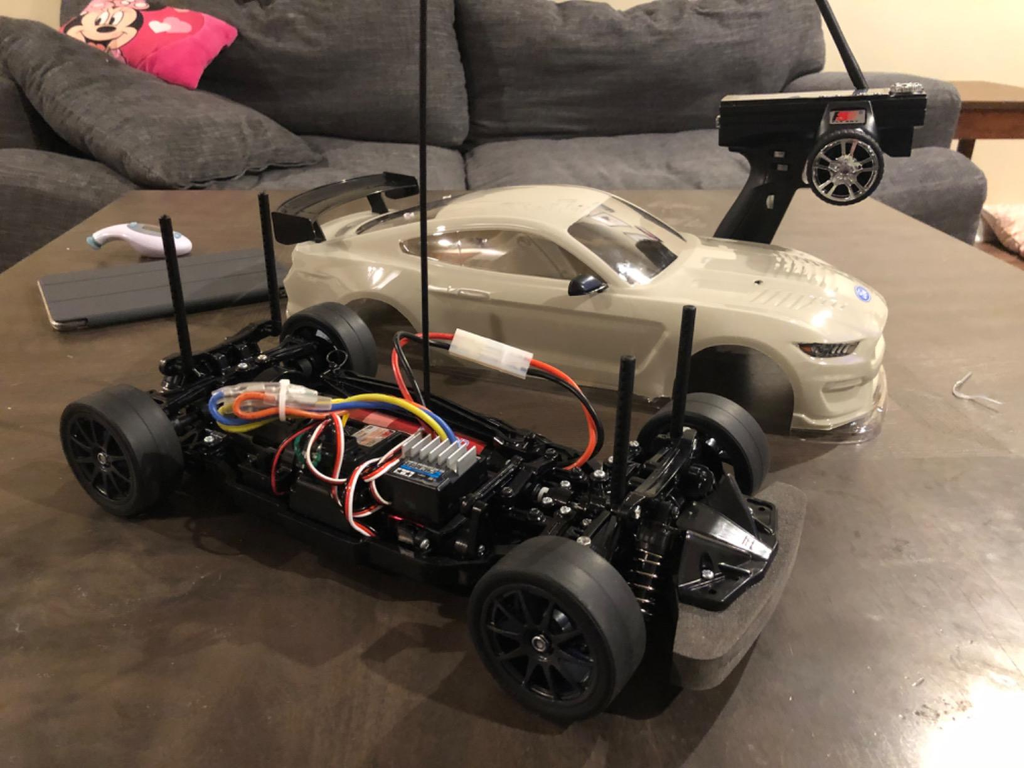
Most adults underestimate how fast RC cars feel at 1/10 scale. A 50 km/h RC car FEELS like 150 km/h because of the size perspective. Start with 2S (7.4V) and a brushed motor. Once you can consistently control the car without crashing into everything, consider upgrading to brushless. For more information read the blogs: http://rcenthusiastic.com
What Terrain Should You Start On?
Smooth pavement or a large grassy lawn is ideal. Avoid:
- Gravel until you know the car (it gets into everything)
- Wet conditions (unless your car is rated waterproof)
- Tight spaces (you WILL crash into things constantly at first)
The Learning Curve for Adult RC Beginners
Week 1: You will crash constantly. This is normal.
Week 2: You start anticipating how the car behaves.
Month 1: You can reliably control the car and start pushing its limits.
Month 3: You start thinking about upgrades.
This is the natural progression.
Embrace the crashes they’re part of learning, and hobby grade cars are built to survive them.
Final Thoughts
Your first adult RC car should be something you can break, fix, and learn from. Don’t start with the fastest, most expensive model start with something durable and manageable. The Arrma Granite is the standard recommendation for a reason: it’s tough, fun, and supports your growth as you improve. Buy extra batteries, keep spare parts on hand, and enjoy every crash as a learning opportunity.
Frequently Asked Questions (FAQ)
Do I need a hobby shop nearby to get into RC cars?
No. Online retailers (Amazon, AMain Hobbies, Tower Hobbies) carry everything. Local hobby shops are great for advice and immediate parts, but not essential.
How long does a battery charge last?
Typically 20–30 minutes per 5000mAh battery, depending on how aggressively you drive.
Is RC car a cheap hobby?
The initial cost is $150–$200. Ongoing costs are spare parts (a few dollars each), batteries (occasional replacement), and new cars if you want to expand. It can be as cheap or as expensive as you want.
Do I need a license to drive an RC car?
No. RC cars are unregulated in most countries for personal hobby use.
Can I drive my RC car at a park?
Check local rules. Many parks allow it in open areas. Avoid areas where you might startle people or animals.
What’s the best brand for a first RC car?
Arrma and Traxxas are the most commonly recommended for adults due to their durability and parts support.
Should I buy a 2WD or 4WD first car?
4WD is more forgiving and handles a wider range of terrain. 2WD is lighter and generally faster but harder to control on loose surfaces. For a true beginner, 4WD is recommended.